

Research for Tuks FM and the South African Broadcasting Industry

Introduction: Radio’s Greatest Challenge Is Not Competition—It’s Relevance
For decades, radio’s greatest competitor was another radio station. In 2026, that reality no longer exists.
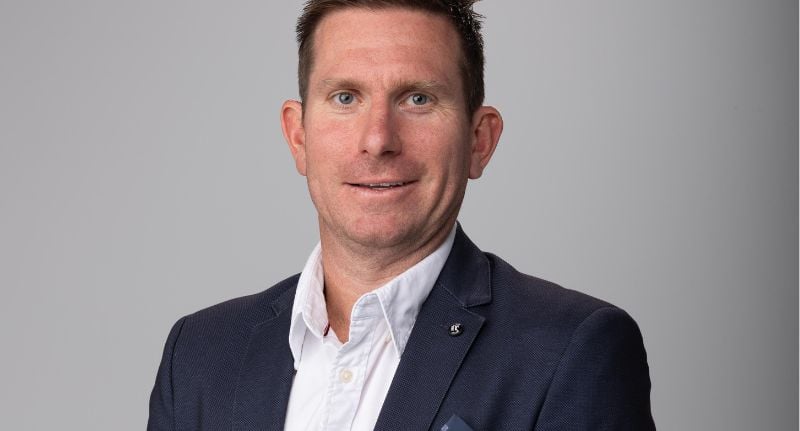
On my recent trip to Australia, I was lucky enough to visit one of South Australia’s biggest stations, SAFM, and sit down with their Head of Content, Matthew O’ Reilly. As the Programme Manager of the legacy campus station back in South Africa, I am reviving our on-air listener presence and rebuilding an edgy, forward-thinking platform for young voices to call home.
We had a cool chat about the Australian market, content “policies”, South African radio fluidity, listener attention and loyalty, dormant versus active audiences, and some added value banter around live-streaming events to audiences.
Today’s listener wakes up to a Spotify playlist, scrolls TikTok while getting ready for work, listens to a podcast during a commute, watches YouTube during lunch, engages with Instagram throughout the day, and only occasionally interacts with traditional broadcast media.
The challenge facing broadcasters globally is therefore not simply audience acquisition—it is audience retention, audience engagement and audience habit formation.
Australia has emerged as one of the most innovative radio markets in the world in adapting to this new reality. While many mature radio markets have struggled with audience fragmentation, Australian broadcasters have successfully evolved by reimagining the role of radio itself.
The key question is no longer:
“How do we get people to listen to our station?”
Instead, it has become:
“How do we become part of people’s daily lives regardless of platform?”
For South African radio stations—and particularly youth-focused stations such as Tuks FM—this shift presents both a challenge and an opportunity.
The Current State of Audio Consumption
The South African Context
South African radio remains one of the strongest broadcast mediums on the continent.
Radio continues to enjoy:
- Significant weekly reach
- Strong commuter listening
- Deep community trust
- Accessibility across socioeconomic groups
- A unique ability to connect with local communities
However, younger audiences increasingly demonstrate behaviours that differ from traditional radio listeners.
Research consistently shows that younger consumers:
- Consume content in shorter bursts
- Expect interaction rather than passive listening
- Value authenticity over production quality
- Follow personalities more than brands
- Discover content through algorithms rather than schedules
The challenge facing many South African stations is that content strategies remain rooted in broadcast-era thinking while audiences have shifted into digital-era behaviour.
The Australian Context
Australian radio faced this challenge earlier.
By 2020, broadcasters were already seeing:
- Declining appointment listening
- Increased streaming audio consumption
- Growth in podcast audiences
- Reduced phone-based interaction
- Greater social media influence
Instead of defending traditional radio structures, many Australian broadcasters reinvented them.
Today, Australia’s most successful stations operate less like broadcasters and more like content ecosystems.
This distinction is critical.
Understanding the Stations
Tuks FM
Mission
To provide a dynamic multimedia platform that informs, educates and entertains while developing future media professionals and serving the University of Pretoria community.
Strategic Advantage
Unlike commercial broadcasters, Tuks FM possesses something extremely valuable:
- A physical audience community.
- Students live together.
- Study together.
- Attend events together.
- Consume media together.
This means Tuks FM can build audience habits both on-air and off-air.
Most commercial stations would spend millions attempting to create this level of community access.
Check out Tuks FM on YouTube https://www.youtube.com/@TuksFM1072Radio
Visit the station online at www.tuksfm.co.za
SAFM Adelaide
Operating in one of Australia’s most competitive radio markets, SAFM has traditionally targeted younger audiences through:
- Contemporary content
- Personality-driven programming
- Local relevance
- Integrated digital strategy
- Community engagement
The station’s success reflects broader Australian industry trends that prioritise audience connection over traditional broadcasting structures.
Case Study One: The Rise of Personality-Led Content
The Problem
Historically, radio stations built loyalty around music.
The assumption was simple:
Play the right songs, and listeners will stay.
Streaming services fundamentally destroyed this model.
Spotify can provide:
- Better personalization
- Unlimited choice
- No presenter interruptions
- Algorithmic recommendations
If music alone determined loyalty, radio would already be dead.
Yet radio remains remarkably resilient.
Why?
Because radio’s true product was never music.
It was companionship.
The Australian Response
Australian stations increasingly invested in personality brands rather than programming clocks.
Shows became:
- More conversational
- More authentic
- More vulnerable
- More community-focused
The presenter evolved from announcer to companion. Listeners no longer tuned in for information. They tuned in for relationships.
Example: The Kyle and Jackie O Effect
Perhaps Australia’s most significant example is the dominance of breakfast radio personalities such as Kyle Sandilands and Jackie O.
While controversial at times, their success demonstrates an important principle: Listeners develop emotional relationships with the hosts.
Research consistently shows audiences describe presenters as:
- Friends
- Companions
- Trusted voices
This relationship creates loyalty that music alone cannot achieve.
Lessons for Tuks FM
Many student presenters focus on:
- Announcing songs
- Reading content
- Delivering information
Australian radio teaches a different lesson:
Listeners do not fall in love with content. They fall in love with people.
Programming should therefore focus on helping presenters answer:
Who are you?
What do you stand for?
Why should listeners care?
Case Study Two: Community Building as Content Strategy
The Problem
Traditional radio sees audience interaction as a feature. Modern radio sees community as the product. This distinction changes everything.
Australian Innovation
Stations increasingly invest in:
Listener Clubs
Members receive:
- Exclusive content
- Priority event access
- Competition advantages
- Insider experiences
Street Teams
- Listeners become ambassadors.
- Instead of advertising the station, they become the station.
Event Integration
- Australian stations understand that every physical event strengthens emotional investment.
- The listener who attends a station event is dramatically more likely to become a long-term listener.
Example
Several Australian broadcasters now view events as audience-retention strategies rather than revenue opportunities.
Their reasoning is simple:
People remember experiences longer than advertisements.
Lessons for Tuks FM
Imagine:
- Residence Champions: Every residence has a Tuks FM representative.
- Faculty Influencers: Students become content contributors.
- Campus Correspondents: Listeners generate stories.
- Student Creator Network: Listeners become collaborators.
Not consumers.
Collaborators.
This shift changes audience loyalty fundamentally.
Case Study Three: Solving the Listener Interaction Crisis
The Common South African Complaint
Many stations say:
“People don’t call anymore.”
The assumption is that audiences have become less engaged.
This is incorrect. Audiences are interacting more than ever. They’re simply interacting elsewhere.
Australian Research Findings
Younger audiences increasingly communicate through:
- Voice notes
- Social media comments
- Messaging apps
- Polls
- Reaction features
- User-generated content
Traditional call-ins introduce friction.
Typing a comment takes seconds.
Calling a studio requires commitment.
Australian Solution
Instead of demanding interaction, successful stations reduce friction.
Voice Note Segments
Listeners contribute content instantly.
Real-Time Polling
Participation becomes effortless.
User Generated Content
Listeners create part of the show.
Social-Led Discussions
Conversations begin online before moving on-air.
Results
Interaction volumes increase dramatically because barriers are removed.
Lessons for Tuks FM
Replace:
“Call us now.”
With:
“Send a voice note.”
Replace:
“Text us.”
With:
“Vote in our Instagram poll.”
Replace:
“What do you think?”
With:
“Show us.”
The easier participation becomes, the more participation occurs.
Case Study Four: The Content Multiplication Model
Perhaps Australia’s most important innovation is understanding that radio content should never exist in only one format.
Historically:
One break = One broadcast moment.
Today:
One break = Multiple assets.
Example
A presenter tells a funny campus story.
Traditional thinking:
The story airs once. Done.
Australian thinking:
Radio
- The original conversation.
TikTok
- The funniest 30 seconds.
Instagram Reel
- Visual highlight.
YouTube Short
- Extended version.
Podcast
- Behind-the-scenes discussion.
Website Article
- Expanded perspective.
Campus Activation
- Live audience participation.
- One idea becomes seven touchpoints.
Why This Matters
Every platform performs a different role.
- TikTok drives discovery.
- Instagram drives engagement.
- Podcasts drive depth.
- Radio drives companionship.
Together, they create retention.
Case Study Five: Data-Driven Programming
One of Australia’s biggest advantages is the aggressive use of audience data.
Programming decisions increasingly rely on:
- Digital engagement
- Completion rates
- Listener drop-off points
- Social shares
- Audience sentiment
Rather than asking:
“Did we like that feature?”
Programmers ask:
“Did the audience like that feature?”
Example
Australian stations frequently review:
- Which segments are replayed
- Which clips are shared
- Which stories generate comments
- Which moments drive streaming spikes
Programming becomes evidence-based rather than instinct-based.
Lessons for Tuks FM
To track:
Retention
How long do people listen?
Participation
How often do they engage?
Advocacy
How often do they share?
Return Frequency
How often do they come back?
These metrics may be more valuable than traditional reach.
The Most Important Lesson: From Audience to Community
The future belongs to stations that understand a simple truth:
- An audience listens.
- A community participates.
- An audience consumes.
- A community contributes.
- An audience leaves.
- A community returns.
Australian radio’s greatest innovation has not been technology.
It has been recognised that radio’s future lies not in transmission, but in relationship.
Strategic Recommendations for Tuks FM
Immediate Actions (0–6 Months)
- Launch a Tuks FM student ambassador programme
- Introduce voice-note driven content segments
- Create platform-specific content teams
- Build presenter personal brands
- Implement audience retention tracking
Medium-Term Actions (6–18 Months)
- Develop a Tuks FM membership programme
- Launch residence-based content networks
- Create regular campus activations
- Build a podcast ecosystem
- Develop a creator collaboration strategy
Long-Term Vision (18–36 Months)
Transform Tuks FM from:
A Campus Radio Station
Into:
The Digital Community Hub of Student Life at the University of Pretoria
Conclusion
The most valuable lesson Matthew O’Reilly and the Australian industry can offer South African broadcasters is this:
- Radio is no longer defined by a transmitter.
- A relationship defines it.
- The stations thriving in 2026 are not necessarily those with the biggest signals, the largest budgets or even the best music.
- They are the stations that create belonging.
For Tuks FM, the opportunity is immense.
We already have access to one of the most engaged, connected and influential communities in South Africa: university students.
The question is not whether students want content; the question is whether radio is willing to evolve into the type of community they want to join.
The future of radio is not broadcasting.
The future of radio is participation.
And the stations that understand this first will own the next decade of audio.
